Moqueca CapixabaEspirito Santo Stew
An indigenous coastal stew that acts as an excellent low-competition long-tail keyword variant.
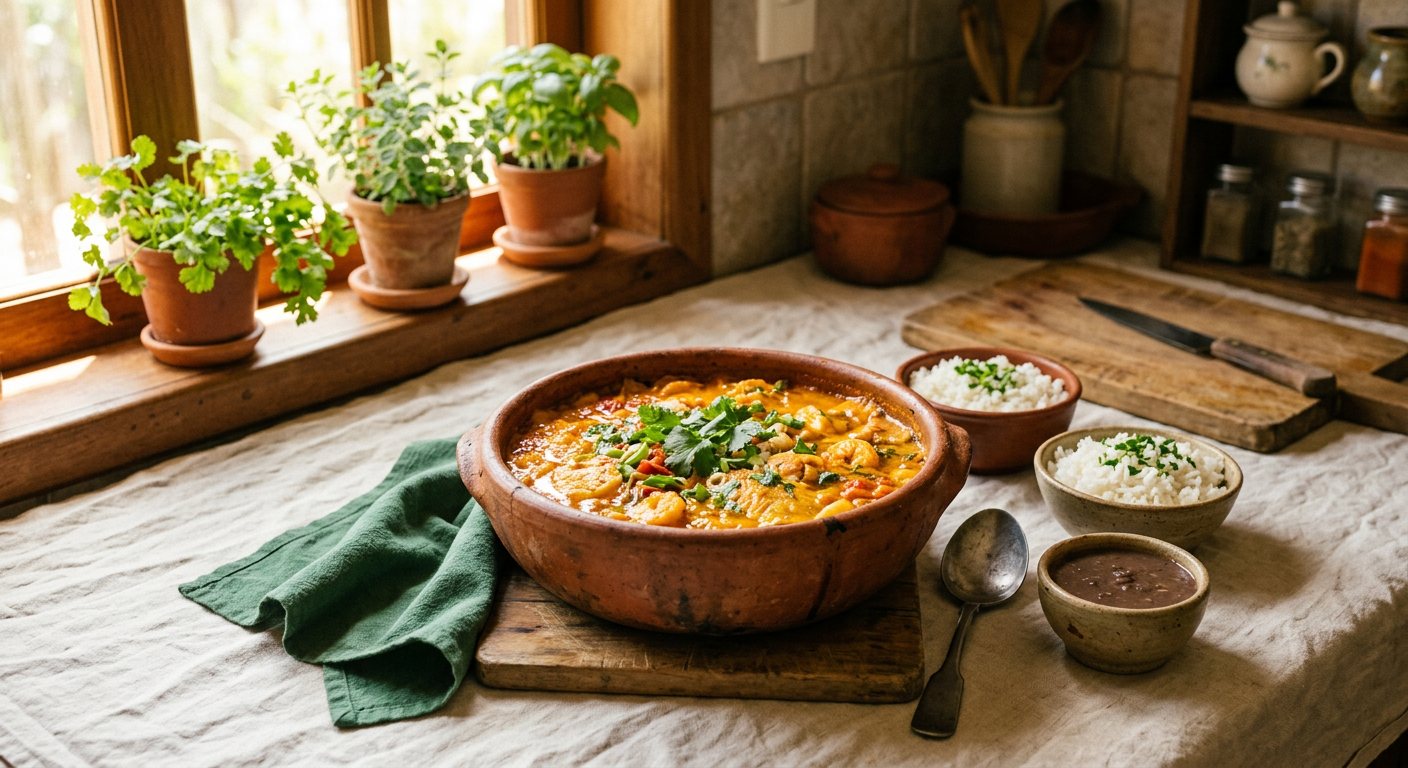
Hailing from Espírito Santo, Moqueca Capixaba is an indigenous coastal stew that omits coconut milk and dendê oil entirely. Instead, it uses extra virgin olive oil, annatto (urucum), fresh tomatoes, and herbs to create a lighter, clean seafood broth.
Ingredients
- 800 g Firm White Fish Steaks — Primary Delicate Protein
- 30 ml Fresh Lime Juice — Acid Marinade Base
- 40 ml Annatto Oil (Azeite de Urucum) — Natural Red Color Agent
- 30 ml Extra Virgin Olive Oil — Lipid Base
- 300 g Ripe Tomatoes (Finely Diced) — Fresh Acid Base
- 200 g Yellow Onions (Finely Diced) — Sweetness & Aromatic Base
- 40 g Fresh Cilantro & Chives (Chopped) — Core Herb Accent
- 15 g Garlic (Minced) — Aromatic Accent
- 10 g Fine Sea Salt — Seasoning
Method
- Marinate fish steaksMarinate fish steaks with lime juice, garlic, and salt for 15 minutes
- Heat olive oilHeat olive oil and annatto oil together in a clay pot over medium heat
- Add half ofAdd half of the diced onions, tomatoes, and cilantro, sautéing for 3 minutes until softened
- Arrange the fishArrange the fish steaks over the sautéed base, then top with the remaining tomatoes, onions, and herbs
- Cover the potCover the pot tightly and simmer over medium-low heat for 15 minutes
- The vegetables releaseThe vegetables release their natural juices, forming a light red broth around the tender fish
- Serve directly fromServe directly from the clay pot with white rice and pirão
Questions
How long does Moqueca Capixaba take?
About 15 minutes of prep and 20 minutes of cooking — 35 minutes total, yielding several servings.
Does moqueca capixaba contain coconut milk?
No — that is the Bahian version. The capixaba broth is built on annatto-tinted olive oil, tomato, onion, cilantro and fish, traditionally in a black clay panela.
Why the black clay pot?
The panela de barro of Espírito Santo is seasoned and darkened with use; fans insist it flavors the moqueca. Enameled or not, the pot goes to the table.